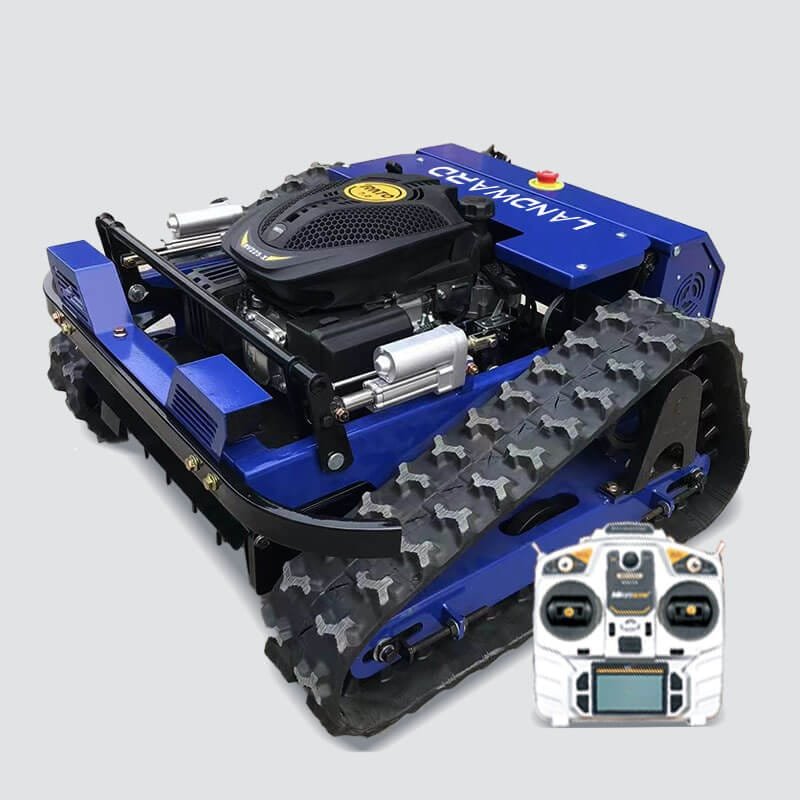
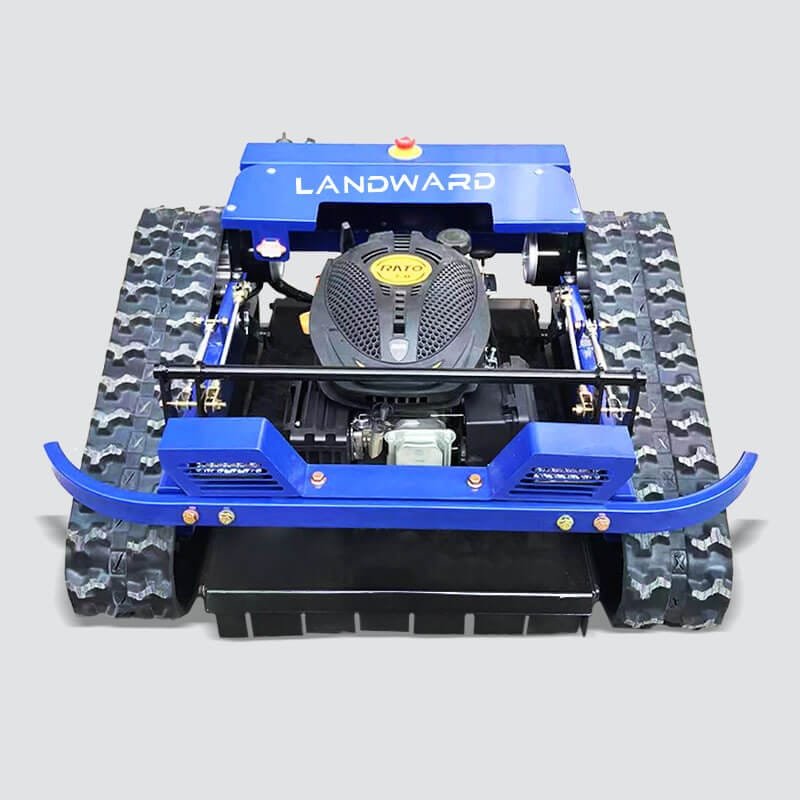
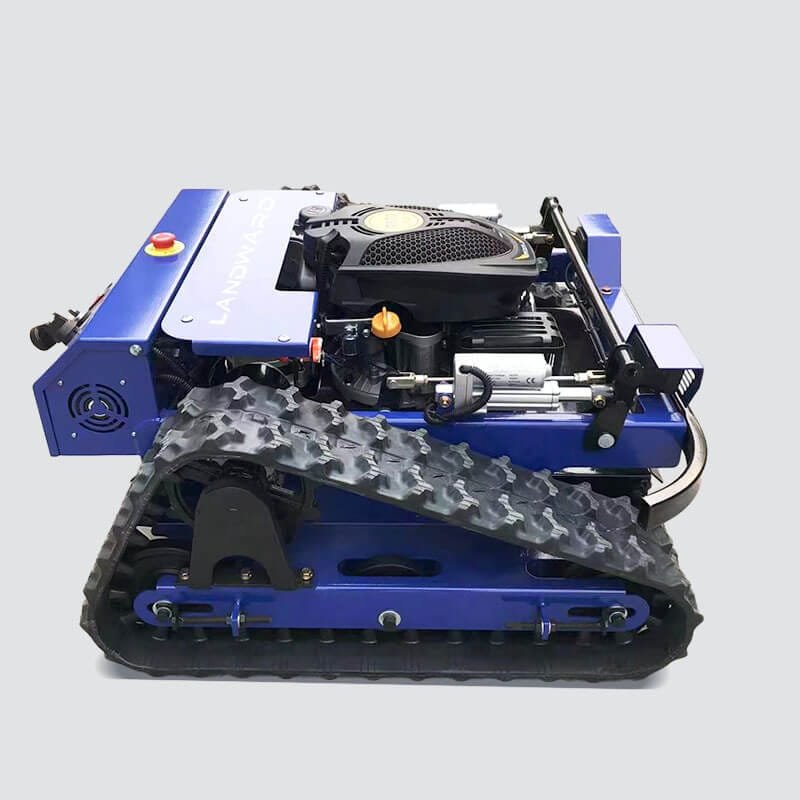
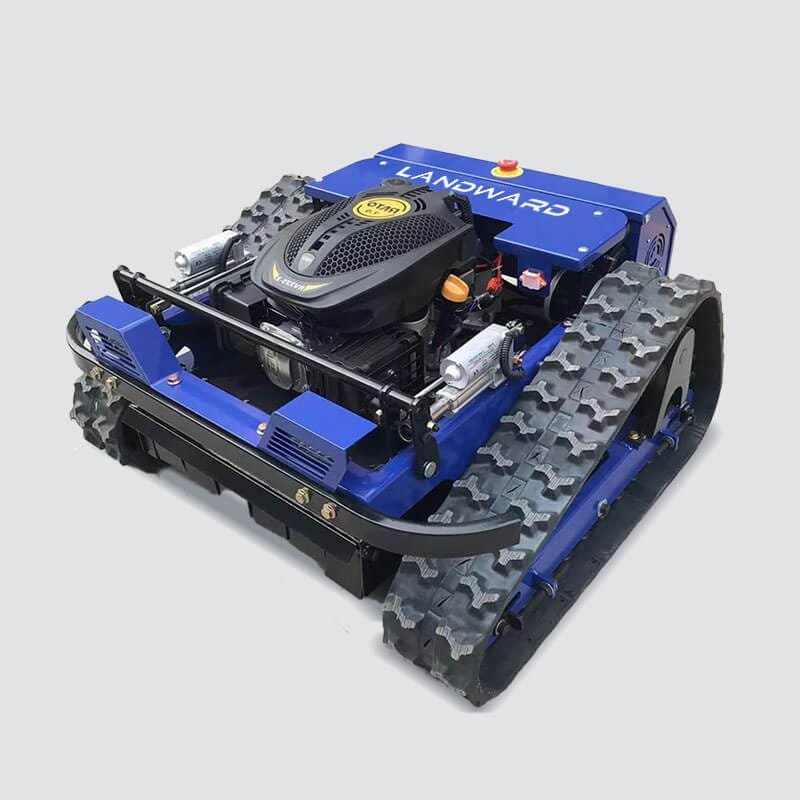
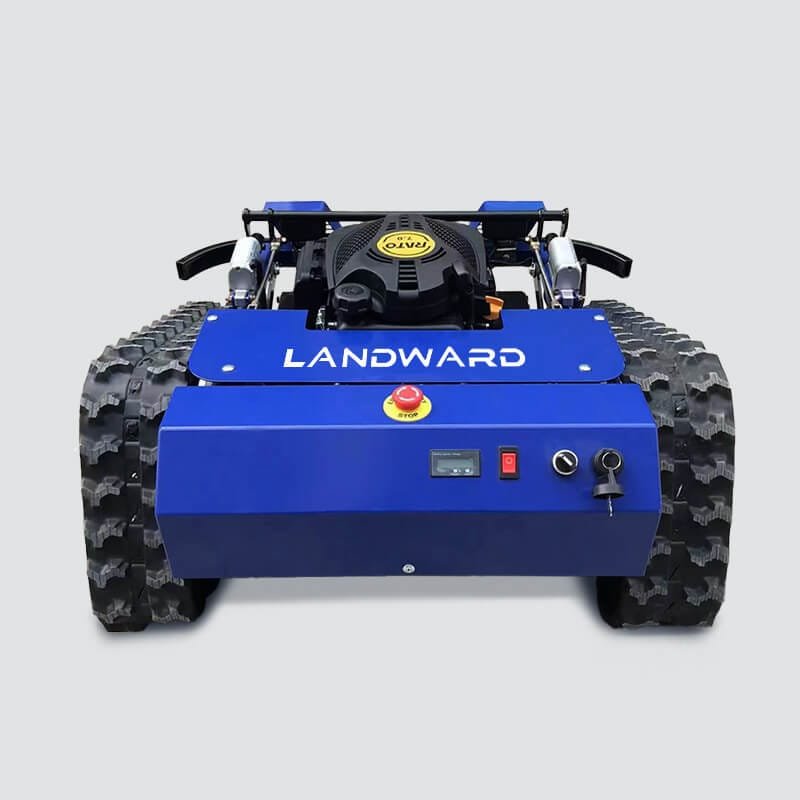
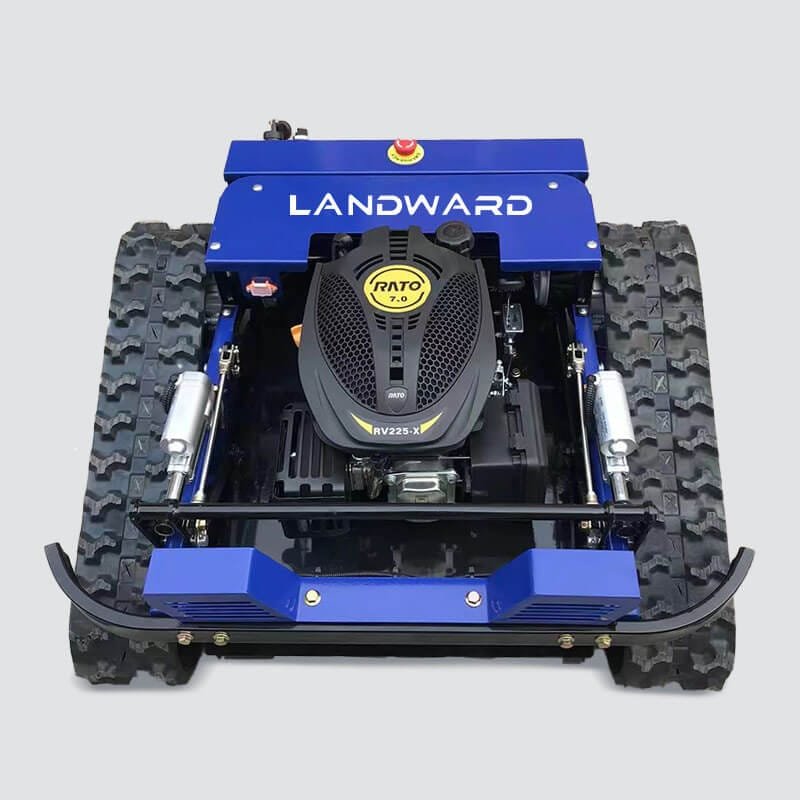
1. Easy operation, labor-saving and time-saving Remote control: Users do not need to push the mower themselves, they can easily operate it through the remote control or mobile phone App, which greatly reduces physical exertion. Suitable for long-term operation: Especially suitable for large lawns or scenes that require long-term work, greatly improving efficiency. Reduce labor intensity: The elderly or people with weak physical strength can also operate it easily, and even complete the mowing task while taking a break. 2. High safety Stay away from dangerous areas: On steep slopes, wetlands or lawns with obstacles, users can control it remotely to avoid slips or injuries caused by improper operation. Automatic stop function: Many wireless remote control mowers are equipped with safety features such as collision detection, automatic stop when tipping over or emergency stop buttons to ensure safe operation. Reduce accidental contact with blades: Traditional mowers require close-range operation, while remote control mowers completely avoid the risk of blade contact. 3. Adapt to complex terrain Strong off-road capability: Most wireless remote control lawn mowers are equipped with crawler tracks or large tires, which can easily cope with various complex terrains, including: Steep slopes (20°~45° slopes) Slippery ground Uneven lawns or fields Obstacle avoidance: Some high-end models can bypass obstacles such as trees, stones or shrubs through sensing systems or intelligent navigation. 4. Efficient mowing Precise control: The direction, speed and mowing height can be precisely adjusted through the remote control to ensure no dead angle operation. Large area coverage: Wireless remote control lawn mowers are usually designed as high-efficiency equipment with a large mowing width (such as 20 inches or wider), suitable for large lawns or farms. Continuous work: Can be equipped with large-capacity batteries or fuel power systems to support long-term continuous operation. 5. Save labor costs Can replace labor: Wireless remote control lawn mowers can complete work independently without supervision, reducing dependence on manual labor. Suitable for professional use: For places where large areas of lawns need to be maintained (such as golf courses, farms, public parks), remote control lawn mowers can significantly reduce operating costs. 6. Environmental protection and low noise Electric models: The electric version of the wireless remote control lawn mower is usually powered by lithium batteries, with zero emissions and excellent environmental performance. Electric lawn mowers are much quieter than fuel mowers and are more suitable for noise-sensitive areas (such as residential areas, near schools or hospitals). Fuel models: With strong power and high fuel efficiency, it is suitable for scenes with larger areas or thicker lawns. 7. Adjustable mowing height and method Equipped with multi-speed mowing height adjustment function to meet the needs of different types of lawns. Supports multiple mowing methods: Grass collection: Collect grass clippings into grass bags for easy cleaning. Crushed grass fertilizer: Grass clippings are crushed and spread directly on the lawn as natural fertilizer. Side discharge: Quickly handle large amounts of grass clippings. 8. Intelligent functions Path planning: Some high-end models have intelligent navigation functions, which can plan the operation path and achieve efficient mowing. Remote monitoring: View the location, working status and battery power of the mower in real time through the mobile phone app. Automatic obstacle avoidance: Use sensors or cameras to identify obstacles and automatically avoid them to avoid damage to the equipment or lawn. 9. Versatility Wireless remote control lawn mowers can not only mow the lawn, but can also be used for other purposes, such as: Clean up weeds Agricultural or garden ground maintenance Mowing of slope protection grass 10. Improve user experience Remote control fun: Remote control lawn mowers make mowing easier and more interesting, and can even be operated like playing with remote control cars, which is especially popular among young users. Time-saving and efficient: Users can handle other matters while mowing the lawn, improving overall work efficiency. 11. Appearance design and brand appeal Wireless remote control lawn mowers usually have a modern appearance and compact design, attracting customers who pay attention to visual experience. High-end brand products pay more attention to detail design and user experience, and are easy to win the favor of developed markets such as Europe and the United States. 12. Wide range of application scenarios Home use: Suitable for daily maintenance of medium and large courtyard lawns. Commercial places: Such as golf courses, public parks, municipal green belts and other scenes that require large-scale lawn maintenance. Agricultural use: Suitable for weeding farms or orchards. Special environments: such as slope grass maintenance on both sides of highways, weed clearing in industrial sites, etc. 13. Reduce operational risks For dangerous or inaccessible lawn areas (such as slopes, bushes, wetlands, etc.), remote operation of remote control mowers ensures the safety of users and avoids the risk of directly entering dangerous areas for operation. 14. Long-term economy Although the initial cost of wireless remote control mowers is higher, the high efficiency, labor saving and low maintenance make them more economical in long-term use. The low operating cost of electric models (no fuel and oil required) also further reduces the cost of use.